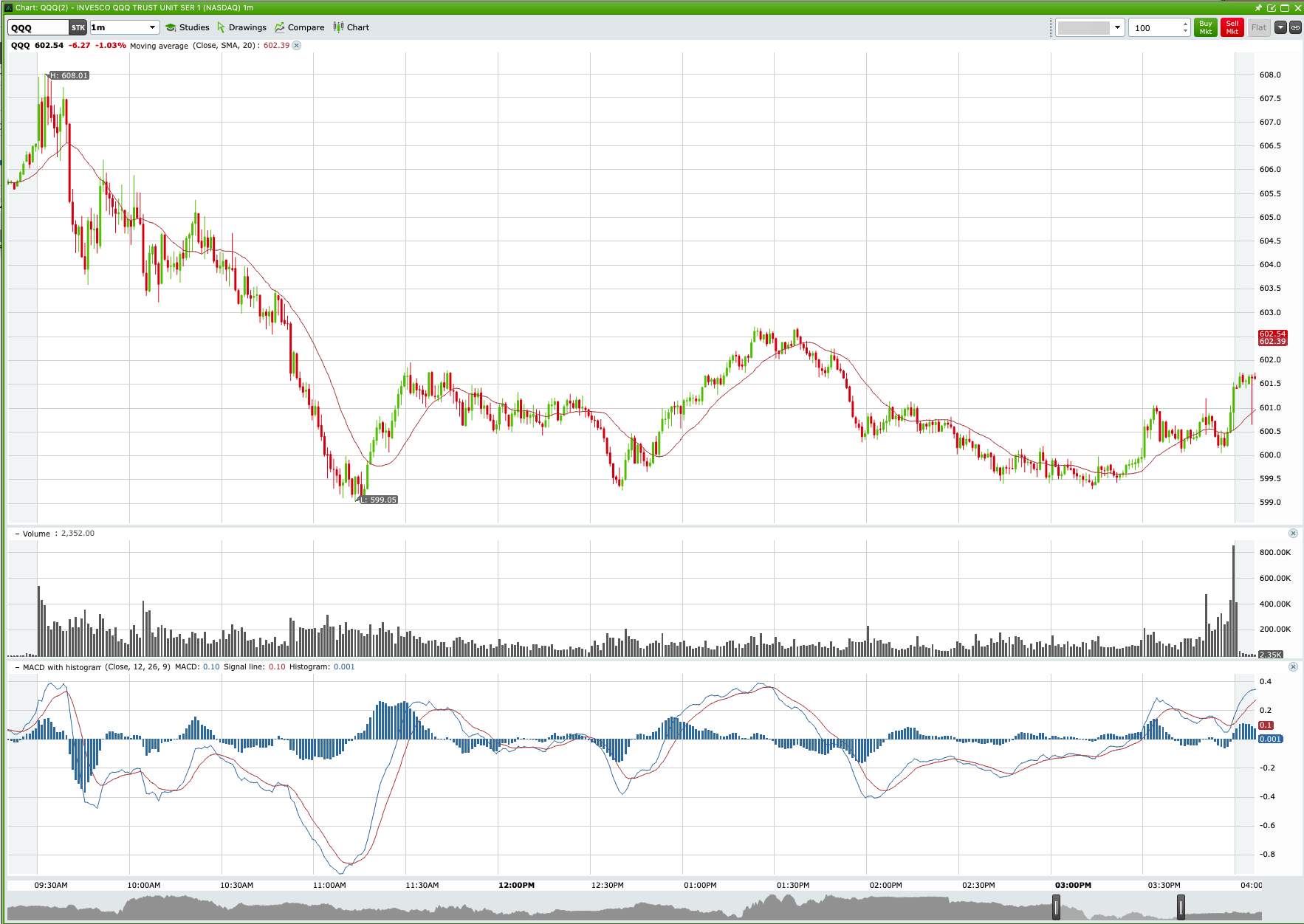

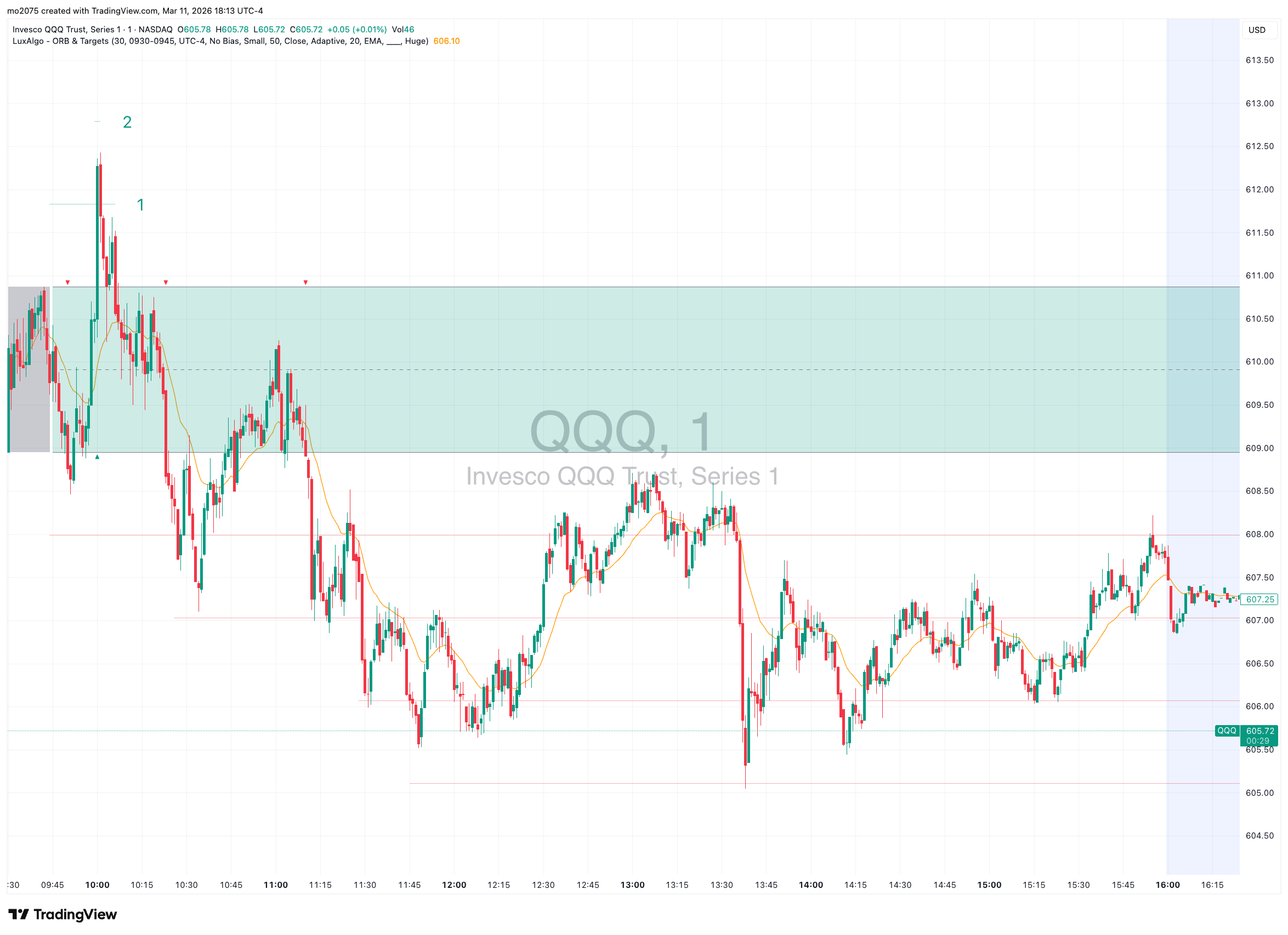
On March 11, 2026, the Invesco QQQ Trust (QQQ) provided a textbook "bull trap" followed by a persistent downward trend. After a strong opening rally that reached a daily high of $612.45, the index faced immediate rejection at technical level "2". The 1-minute chart shows the price breaking below its 20-period EMA and the ORL (Opening Range Low) early in the session, triggering a "stair-step" decline that lasted through the afternoon. Despite several minor recovery attempts, the index hit a daily low of $605.15 before settling at $605.72.
The 0-DTE (zero days to expiration) derivatives market for the $609.00 strike was defined by terminal decay and high-impact volatility:
-
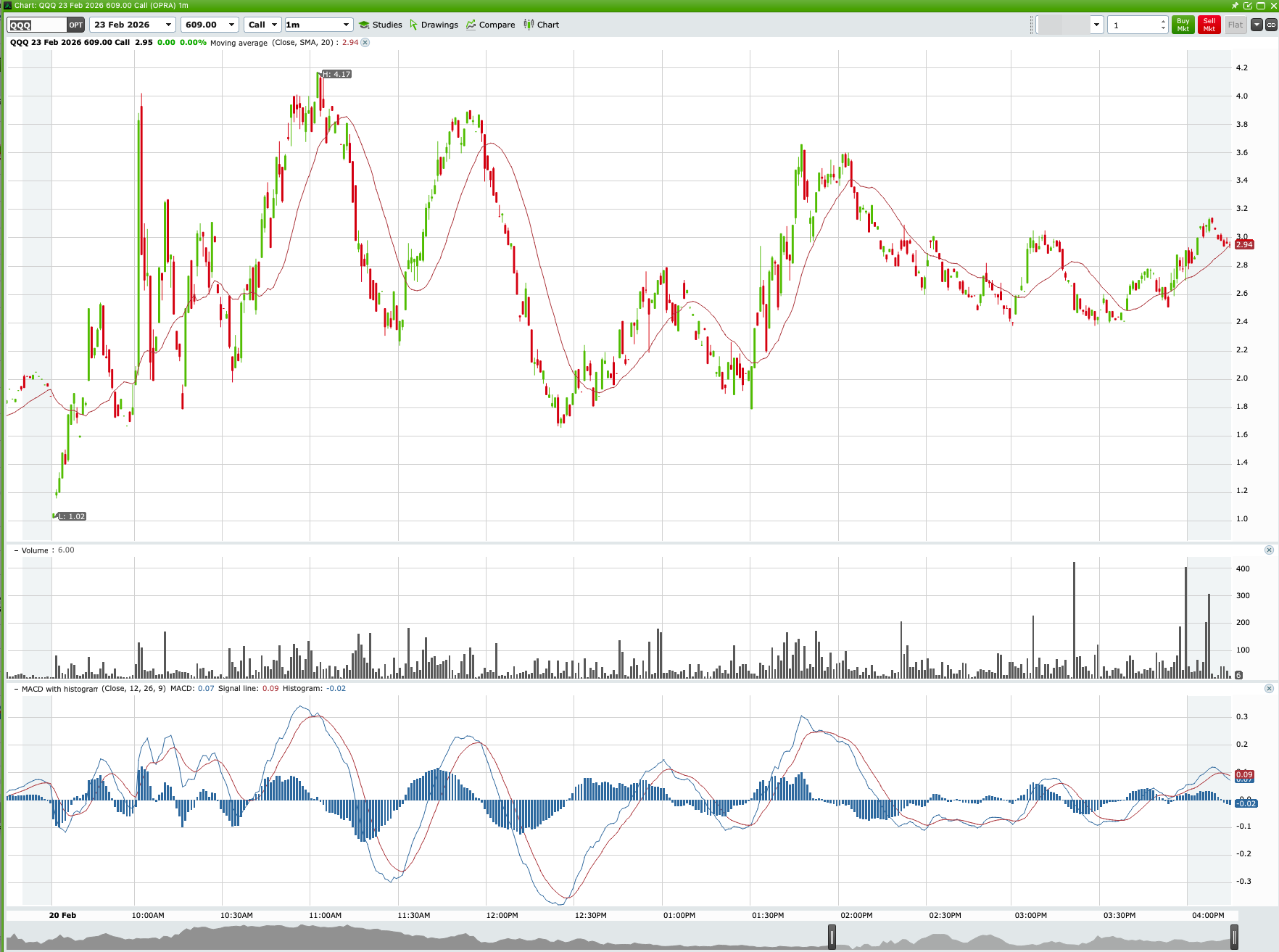
$609.00 Call Option: These contracts peaked early at $4.60 during the morning breakout attempt but were completely decimated as the index fell below the strike price. The premium entered a relentless downward spiral, characterized by seven distinct technical target levels on the downside, ultimately expiring worthless at $0.01.
-
$609.00 Put Option: Bearish traders capitalized on the index's weakness throughout the day. These puts bottomed out at $1.05 during the morning peak before surging over 300% to hit a daily high of $4.20 as the stock bottomed out in the afternoon. However, a late-day consolidation in the QQQ caused a sharp "IV crush" and delta loss, with the puts settling at $1.68 by the close.
-
$607.00 and $606.00 Call Options: Similar to the $609 strike, these closer-to-the-money calls also suffered heavy losses. The $606.00 call managed to hold some value mid-day near $4.20 but eventually succumbed to the afternoon sell-off, closing at $1.35.
The technical environment was dominated by a confirmed bearish trend following the failure to hold the ORH (Opening Range High). The LuxAlgo indicators showed "Huge" selling pressure during the mid-day flush, with the price staying pinned below the adaptive EMA for the majority of the session. This day served as a stark reminder of the risks of holding bullish positions on 0-DTE contracts when the underlying index fails to sustain an early breakout.